Most "easy plant" lists throw together whatever tolerates neglect, and the result looks like a nursery clearance section, not a curated home. On the flip side, styled plant collections in design magazines often demand hours of fussing: frequent watering, humidity adjustments, pest monitoring, seasonal repotting.
Both paths feel like a trap: choose plants that look random, or choose plants that run your schedule.
They do not have to be mutually exclusive. A thoughtfully chosen plant palette, one matched to your actual light, layout, and available time, can look intentional and pulled-together while staying genuinely manageable.
The difference is not buying more resilient plants. It is choosing them with intention before you bring them home.
Here's the framework: match your space and habits to plants first, then arrange them so the collection reads as a design decision rather than an accident. You will skip the productivity tools, the expensive systems, and the rigid watering schedules. What you will have is a plant display that feels calm and looks purposeful.
Key Takeaways
- Low-maintenance plants tolerate missed waterings and inconsistent light without dying quickly, but they still require appropriate conditions to genuinely thrive rather than merely survive.
- Assess your actual light levels and schedule before shopping, then build a small core palette of resilient species suited to those conditions and repeat them throughout your space for a cohesive look.
- Group plants by their shared water and light needs rather than by visual placement to reduce weekly chores and the mental load of managing different care schedules.
- Create visual cohesion through repeated elements like pot color or material rather than matching everything, which adds intentional style without increasing maintenance work.
- Check what each plant actually needs once weekly rather than following a fixed watering calendar, and reserve higher-maintenance specimens for one or two intentional focal points if desired.
Table of Contents
- Start with Your Light and Layout Before You Shop
- Know What Low-Maintenance Actually Means for a Plant
- Build a Core Palette of Naturally Resilient Plants
- Group Plants by Water and Light Needs to Cut Weekly Chores
- Style for a Curated Look Without Adding Extra Work
- Skip the High-Maintenance Trends That Work Against You
- Set Up a Simple, Condition-Based Care Routine
- Decide When a Higher-Maintenance Plant Is Worth It
- Frequently Asked Questions
Start with Your Light and Layout Before You Shop
Most plant problems start before the plant arrives home. You choose something beautiful at the nursery, bring it back to a dim corner, watch it weaken over weeks, and assume you chose wrong. The plant did not fail; the choice was made without information.
Before you buy anything, spend one day tracking the actual light in your space. Not the window direction, the real light that lands on your shelves and surfaces.
Sit with your phone camera or just observe: Does direct sun hit the area for part of the day, or does the light stay soft and indirect? Is the corner genuinely dim, or does it receive ambient brightness from nearby windows?

At the same time, measure the realistic space you can use. A wide windowsill holds fewer pots than you think once you account for lifting and watering.
A corner shelf bows under weight faster than it looks like it should. Be honest about where you can actually reach to water and check soil without moving other plants or furniture.
With light and layout mapped, the plant choice becomes simpler. Match what you have:
- Bright direct light (several hours of sun): herbs, flowering plants, succulents
- Bright indirect light (near a window, no direct sun): most tropical houseplants, pothos, snake plant
- Low to medium light (away from windows or north-facing): tolerance only, not thriving, choose carefully
Shopping before this step guarantees wasted money. You will replace struggling plants or buy grow lights to compensate for a choice made without a plan. Start with what your space actually offers, and the plant will prove its choice was right.
Know What Low-Maintenance Actually Means for a Plant
"Low-maintenance" does not mean the plant will thrive in darkness while you ignore it for months. It means the plant tolerates missed waterings, inconsistent light, and small mistakes without dying immediately. That is a meaningful difference.
A resilient plant still needs occasional attention. You will still check the soil, adjust watering as seasons change, and move the pot if it outgrows its space. The maintenance is simpler, not absent.

The real tradeoff appears in growth and blooms. A plant that tolerates low light often grows slowly.
A plant that forgives irregular watering may produce fewer flowers or take longer to fill out. You trade visual drama for reliability.
For an apartment routine, this is the right deal. A slow-growing pothos that survives weeks between waterings beats a fussy orchid that demands constant humidity and specific watering timing. A snake plant that tolerates neglect and low light costs you excitement but saves you from repeatedly replacing dead plants and feeling frustrated about the whole project.
When you choose a plant that genuinely suits your conditions and your schedule, the maintenance becomes something you do without thinking, not a chore you dread. Start there.
Keep planning:


Build a Core Palette of Naturally Resilient Plants
Instead of collecting every plant that catches your eye, choose a small list of species that genuinely suit your light and schedule, then repeat them. A few pothos vines in different corners, two or three snake plants at varying heights, and maybe a spider plant on a shelf creates a cohesive look that feels intentional rather than random.
It also simplifies your mental load: you know how often each type actually needs water, what size pot it prefers, and whether it will eventually outgrow its space.

Group plants by the light your apartment actually receives.
Low to medium light (north-facing or interior rooms): Snake plant, ZZ plant, pothos, cast iron plant. These tolerate irregular watering and slow growth.
Most stay compact; snake plants mature around 2-3 feet tall in a pot, ZZ plants similar. Pothos vines can grow longer but are easily trimmed.
All are non-toxic to pets, though pothos causes mild stomach upset if chewed. Cost: $8-25 per small plant depending on size and source.
Bright indirect light (east or west windows, or a few feet from south-facing glass): Spider plant, parlor palm, philodendron, peperomia. Spider plants tolerate some neglect and produce trailing babies you can propagate.
Mature size varies from 1-3 feet depending on variety.
All are beginner-friendly. Cost: $10-30 for a starter plant.
Start with one or two plants from your light category rather than buying a full collection at once. A single pothos in a 4-inch pot costs under $10 and teaches you the watering rhythm before you expand.
Once that plant settles, add another. This approach spreads costs over time and lets you adjust your choices based on what actually thrives in your space.
Group Plants by Water and Light Needs to Cut Weekly Chores
Scattering plants around your apartment according to decor means you check soil moisture, adjust light exposure, and water on different schedules. Grouping plants by their actual needs, not by where they look best, cuts the mental load and the time spent troubleshooting mismatched care.

Create two simple clusters: one for drought-tolerant plants (ZZ, snake plant, pothos, philodendron) and one for plants that prefer consistent moisture (peperomia, parlor palm, spider plant). Each cluster occupies one shelf, corner, or windowsill and follows its own watering rhythm.
Drought-tolerant plants need water every 2-3 weeks or longer; you check soil by pressing your fingertip into the top inch. If it feels dry, water. Moisture-lovers need checking more often, usually every 7-10 days, but they still follow the same rule: water only when the top soil feels dry to the touch.
The tradeoff is real: grouping by need may mean moving a plant away from your favorite spot. A pothos might grow better a few feet from the window than on your shelf. A spider plant thrives in bright indirect light, not deep shade.
Pick one cluster to start. Water all plants in that group the same day each week, but only if the soil actually needs it. This habit takes minutes instead of the daily guessing game.
Style for a Curated Look Without Adding Extra Work
A collection of plants in mismatched containers and heights can look intentional or chaotic depending on one choice: repetition. You do not need matching everything, but repeating one element, pot color, material, or size, ties grouped plants together visually without requiring any extra watering or care.

Start with what you already own. Terra cotta pots, ceramic containers, plastic nursery pots, or even repurposed bowls and jars can work if they have drainage holes.
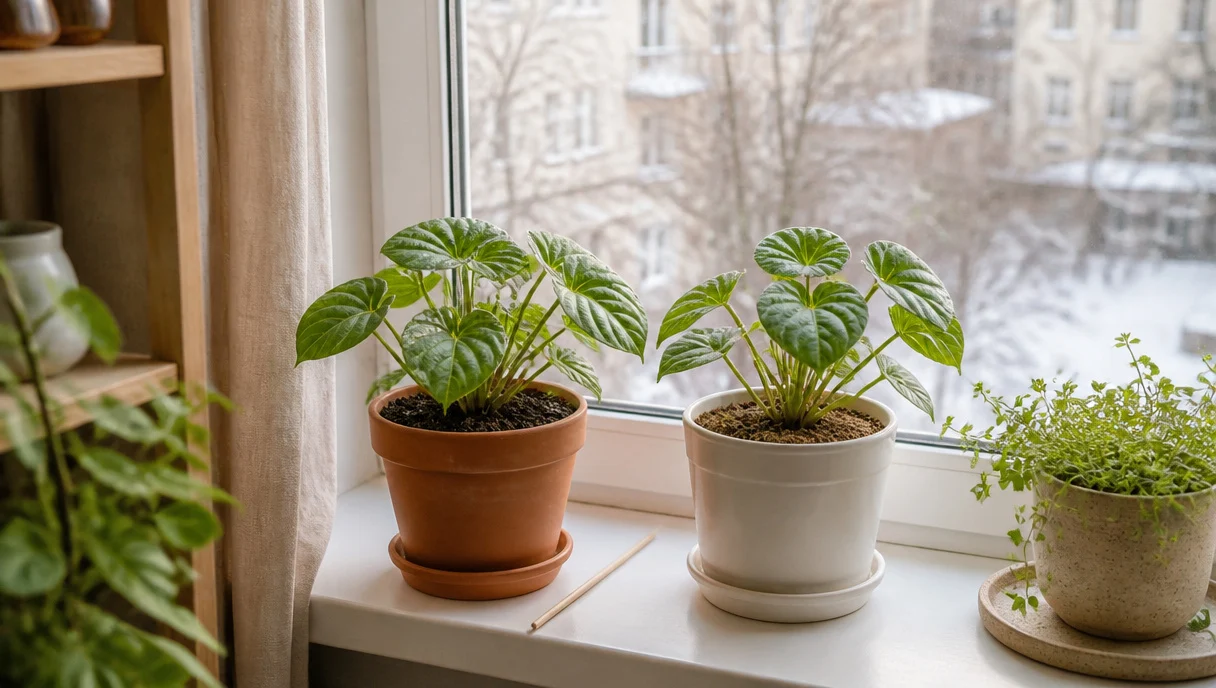
Line up three or four of the same color or style, then vary the leaf shape and height within that group. A trailing pothos beside a compact peperomia beside a taller parlor palm creates depth while all three follow the same watering schedule.
Decorative cachepots and plant risers are optional. They look polished, but they add cost and handling without changing how or when you water.
If you want them, buy one or two to try; they work best for plants you water less frequently. For your high-traffic cluster, stick with practical containers that drain freely.
Vary height using book stacks, small plant stands, or shelves you already have. Uneven heights draw the eye upward and make a small space feel fuller without crowding the shelf or windowsill.
Group plants by care need first, then arrange by color and shape. The styling matters only if the plants are actually thriving.
Skip the High-Maintenance Trends That Work Against You
Popular plants often become popular for their looks, not their fit with your actual routine. A fiddle leaf fig delivers drama and height, but it demands consistent bright light, careful watering, and regular leaf wiping.
Calatheas are stunning, but they sulk in low humidity and struggle with inconsistent moisture. Certain orchids bloom reliably in a greenhouse; in an apartment, they often drop buds before flowering again.

Choosing a fussier plant is not forbidden, but it is a real commitment. If you are building a routine that saves time, skipping the plants that demand daily or weekly monitoring is a practical choice, not a failure of taste.
Swap these trending plants for visually similar, genuinely easier alternatives:
- Fiddle leaf fig (tall, dramatic, high-light need) → Rubber plant or dracaena. Same vertical impact, more flexible with light, simpler watering.
- Calathea (patterned leaves, humidity-sensitive) → Maranta or syngonium. Beautiful foliage, tolerate normal apartment air, more forgiving with moisture.
- Finicky orchids (showy blooms, specific dormancy needs) → Phalaenopsis orchids or African violets. Simpler care, still flower reliably, less seasonal fussing.
A routine that sticks uses plants you can actually maintain. Choosing based on fit instead of trend keeps your setup sustainable and your plants genuinely healthy.
Set Up a Simple, Condition-Based Care Routine
A routine that saves time does not follow a watering calendar. Instead, spend 10 to 15 minutes once a week checking what each plant actually needs right now.

Here is the walk-through:
- Check soil moisture. Push your finger about an inch into the soil. If it feels dry, water. If it feels moist, skip it. This takes seconds per plant and beats any guessing.
- Lift pots to judge weight. A heavy pot holds plenty of moisture; a light one is drying out. This becomes automatic with practice.
- Look for stress signs. Drooping leaves, yellowing growth, or pale color tell you something needs adjustment, usually light or water.
- Rotate for even growth. A quarter turn spreads available light around the plant. Do this weekly or every other week to prevent one-sided reach toward the window.
You do not need a moisture meter or app timer. A finger test and a quick look at each plant save you from watering on autopilot and then wondering why a plant drowns.
This routine saves 30+ minutes per week compared to plant-by-plant guesswork and eliminates the "did I water that one already?" second-guessing. More importantly, your plants show you exactly what they need instead of suffering through a fixed schedule.
Decide When a Higher-Maintenance Plant Is Worth It
A streamlined routine does not mean every plant has to be bulletproof. If you want one showier specimen for personality, something with dramatic foliage, frequent blooms, or faster growth, you can choose it intentionally without derailing your whole setup.

The key is isolation. Pick one fussier plant only if you can give it consistent attention and ideal conditions. That means bright, stable light; a spot where you will notice it daily; and enough bandwidth in your routine to check it separately from the rest of your collection.
A finicky plant thrives when it gets dedicated focus instead of being crammed into a lineup of low-maintenance specimens. Place it on a shelf, table, or windowsill where you pass it often, somewhere you will catch drooping leaves or dry soil before they become serious.
This one exception does not add much time to your overall routine. You are still watering and rotating the rest of your plants in one efficient pass. The fussier plant simply gets its own attention moment, isolated from the rest of the system.
Start with one. If it thrives and you genuinely enjoy the extra interaction, add another. If it feels like a chore instead, you know the answer for next time.
Frequently Asked Questions
Can low-maintenance plants still look stylish together?
Absolutely. Repeat a limited palette of pots in two or three neutral colors, then vary leaf shape, texture, and plant height to create visual interest.
A trailing pothos next to an upright snake plant in matching ceramic pots looks far more intentional than mismatched containers holding random specimens. The consistency makes even simple plants feel curated.
Do low-maintenance plants need any care at all?
Yes. Low-maintenance means they forgive occasional missed watering, erratic light, or skipped rotations, not that they thrive on complete neglect.
They still need occasional water, sufficient light for their type, and pot checks for drainage and root health. The difference is the margin for error is wider, so your routine can be simpler and less precise.
What's the tradeoff of choosing only resilient, easy-care plants?
You gain time and forgiveness but may trade away fast growth, dramatic seasonal blooms, or the standout appeal of fussier species. A pothos grows steadily but not spectacularly.
A snake plant is dependable, not showy.
If you want bold flowers or rapid transformation, a collection built entirely on resilience will feel subtle rather than dramatic. That is not a weakness if you value a calm, stable garden.
Should I use self-watering pots or watering globes?
Only if they solve a specific problem. Self-watering pots work best for water-loving plants and inconsistent schedules, but they can trap moisture around sensitive roots and are not appropriate for succulents or drought-tolerant herbs.
A watering globe buys time during short trips but is not reliable for weeks away and can encourage overwatering. For most low-maintenance plants, a simple pot with drainage and occasional hand watering is more flexible and honest about what your plant actually needs.
What if my apartment has very low light?
Low-light-tolerant plants like pothos, snake plant, and ZZ plant survive in dim spaces but do not truly thrive there. They grow slowly and lack vigor.
If low light is your only option, accept slower growth as part of the tradeoff, rotate plants occasionally toward any available window, or consider one or two inexpensive LED grow lights to improve results. Do not expect a dark corner to suddenly become a lush garden without extra support.
Can I group plants together to reduce watering?
Grouping plants creates a microclimate with slightly higher humidity, which can help, but it does not eliminate individual watering needs. A moist-loving plant and a succulent should never be grouped because they need opposite schedules.
Group plants with similar light and water requirements instead. Clustering still requires checking soil for each plant separately, not watering the whole group on the same day.
How do I know if I have chosen the right plant for my space?
Give it four to six weeks. If the plant maintains steady growth, holds its leaf color, and does not show signs of struggle (yellowing, drooping, slow decline), it is suited to your conditions.
If it declines despite your care, the light or humidity is likely wrong, and swapping it for a different species is wiser than fighting the space. Choosing the right plant upfront saves far more time than trying to fix a mismatch later.
Do I need to fertilize low-maintenance plants?
Not often. Low-maintenance plants grow slowly and need less nutrients than vigorous growers.
A light feeding once or twice a year, diluted and applied when the plant is actively growing, is usually enough. Many apartment gardeners skip it altogether.
Fertilizer is not urgent unless the plant shows pale, weak new growth, which indicates nutrient depletion. Start without it and add only if growth stalls noticeably.
What's the cheapest way to start a low-maintenance collection?
Start with one or two small plants from a local nursery or big-box store, around five to fifteen dollars each. Reuse pots you already own or find inexpensive ceramic pots secondhand.
Avoid expensive planters, premium soils, and subscription services until you are confident about your space and preferences.
Many successful collections started with a single pothos in a mismatched pot. Expand slowly and only when you know what works.
Is it okay to leave plants alone during a vacation?
Depends on the length and your plant choices. One to two weeks: most low-maintenance plants tolerate dry soil if they are in bright indirect light and not actively growing.
Water thoroughly before leaving, then do not worry. Two to four weeks: move plants away from direct sun to slow evaporation, and consider asking a neighbor to check them or using a watering globe as backup.
Longer trips require more support or plant-sitting help. Do not leave fussy plants unattended.
Building a plant collection that actually fits your life means making one intentional choice at a time. Start by tracking the light in the spot where you want to add plants, then pick two or three resilient options from the same care group rather than a random mix.
Building your collection around a shared light and water rhythm will save you weekly effort while still giving the space a considered, pulled-together look.
You do not need the right tools, the perfect soil, or a detailed watering schedule. You need plants that match the conditions you actually have and the attention you can realistically give. Once those foundations are in place, everything else becomes easier.